

An environmental burden that threatens drinking water
The Vrakunská landfill is one of the most serious environmental threats in Slovakia. It is not only a local problem of one Bratislava borough. This old chemical burden threatens the groundwater of Žitný Ostrov, which is regarded as the largest drinking-water reservoir in Slovakia and one of the most important in Central Europe. That is why the Vrakunská landfill is spoken of as a ticking time bomb.
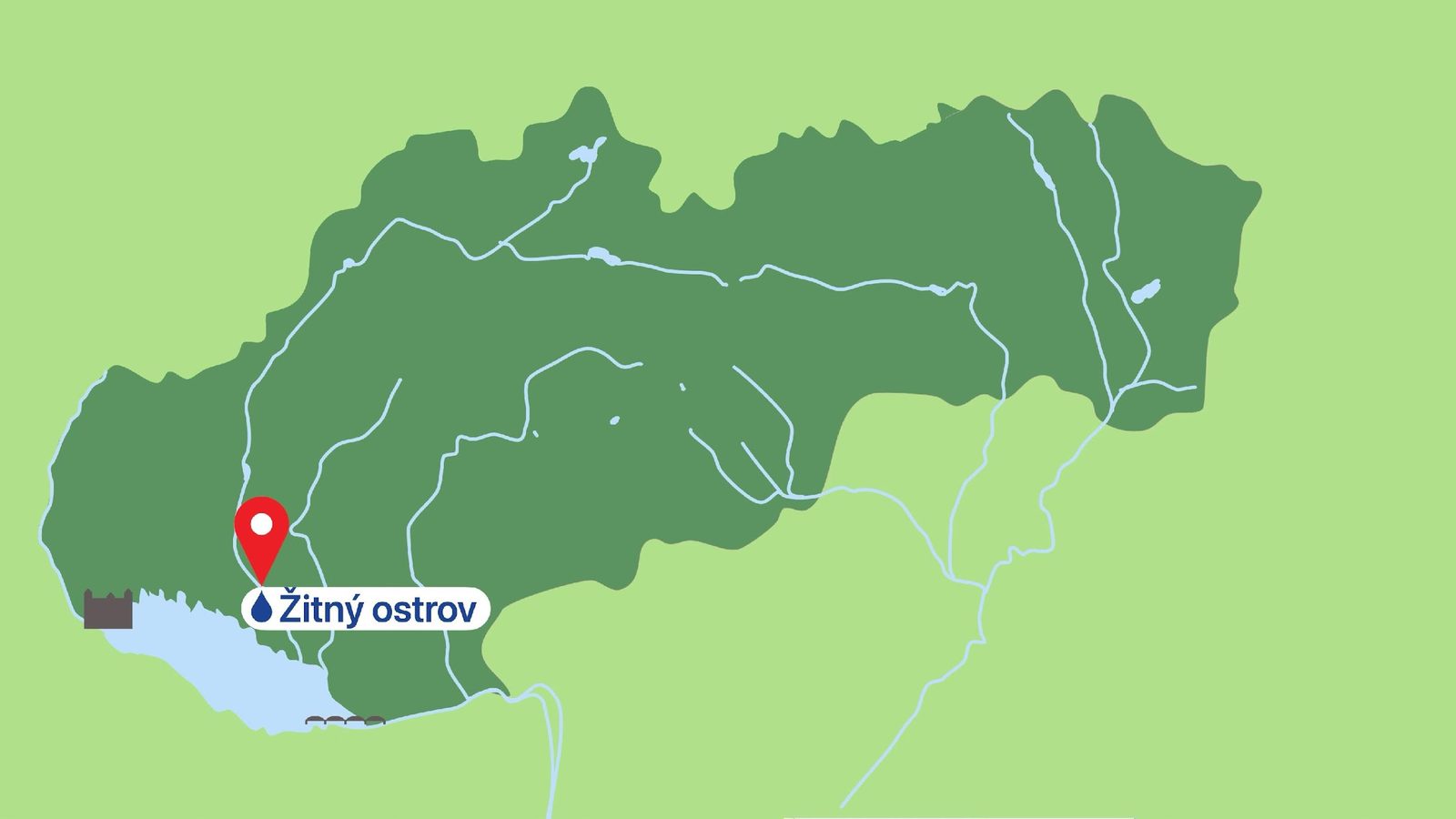
Žitný Ostrov is of extraordinary strategic importance. It is a huge natural reservoir with the potential to supply a large part of the country. At a time when drought, climate change and the risks around water availability are discussed more and more, protecting this area is a fundamental public issue, not only a question of nature conservation.
How the landfill came to be
Behind the name Vrakunská landfill is a former arm of the mill channel of the Little Danube, which was once used as a place to dump waste from chemical production. From roughly the 1960s until the end of the 1970s, toxic and hazardous waste from the Juraj Dimitrov works, later Istrochem, was hauled there. The waste was put into drums, and the drums were then taken to this site, which was finally covered with soil, sealed over and grassed.

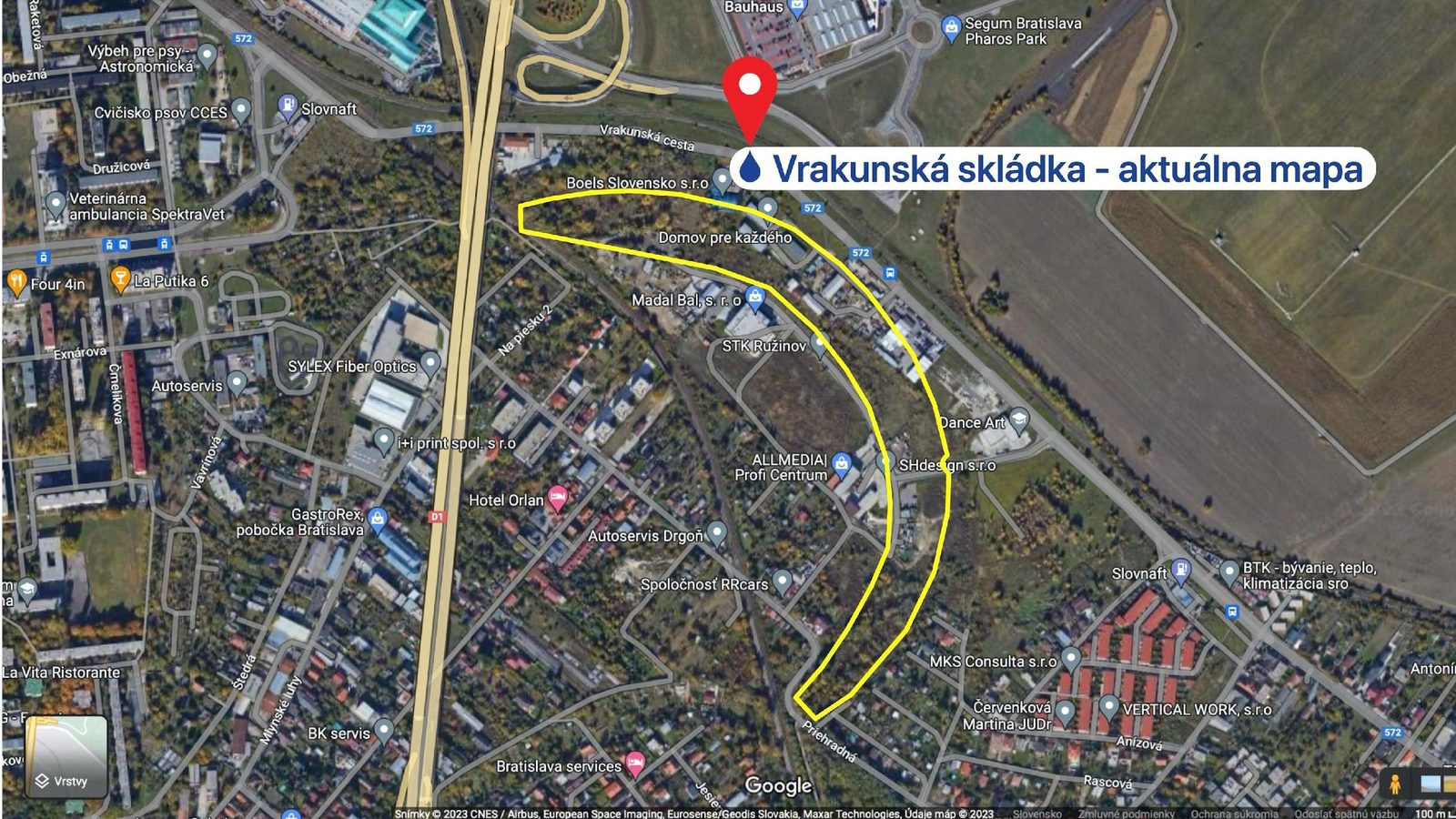
At first glance the landfill disappeared. The problem only moved underground. The metal drums gradually corroded, and after the groundwater level rose following the construction of the Gabčíkovo waterworks, toxic substances began to leak from the drums straight into the underground. That created a pathway through which the contamination started to spread further.
Why the situation is so dangerous
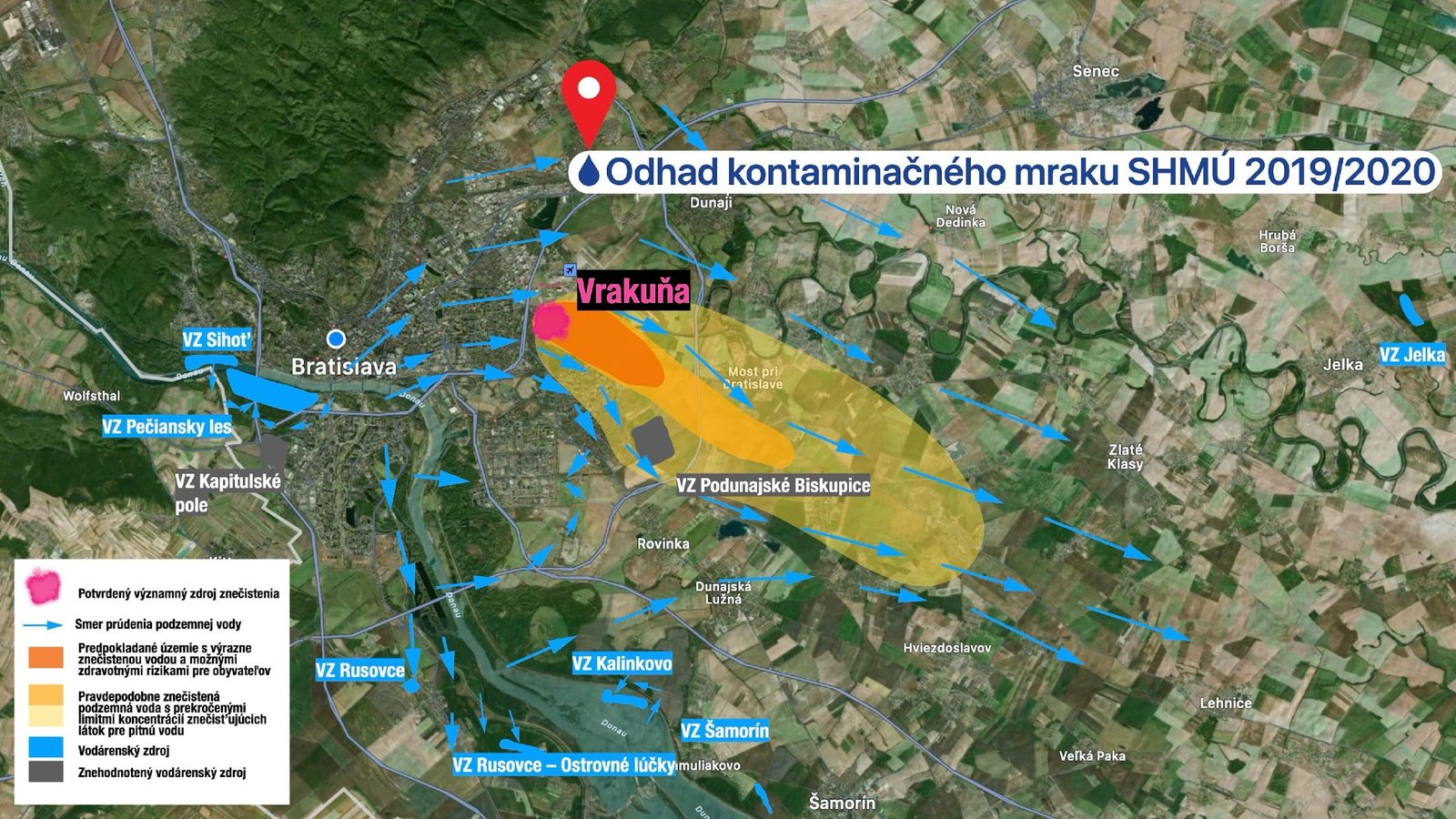
The greatest risk is that the landfill sits at the beginning of Žitný Ostrov, in a place from which pollution can spread towards further water sources. The contamination moves with the groundwater and forms what is called a contamination plume, which gradually shifts in the direction of the natural flow.
That means it is not only about the landfill site itself. The pollution can reach a wider area, affect residents’ wells and, in the future, threaten important sources of drinking water as well. The danger lies not only in what is buried underground, but above all in the fact that the contents of the landfill have been leaking into the environment for decades.
What is in the landfill
According to the available data, the Vrakunská landfill contains hundreds of chemical substances. More than 400 contaminants are spoken of, including carcinogens, heavy metals, pesticides and other highly hazardous chemicals. Benzene, toluene, arsenic, lead and even some substances linked to the production of chemical warfare agents are mentioned.
It is the composition of the waste that makes this landfill an exceptionally serious problem. It is not one known substance that could simply be tracked and removed. It is a chemical cocktail whose behaviour in groundwater is complex and whose removal would be very demanding both technically and financially. Some substances spread faster, others more slowly; some bind to the soil, others sink deeper. All of that complicates both the estimate of the risk and the design of solutions.
Residents with wells are at risk too
The problem of the Vrakunská landfill is not only about the future of large water sources. It also concerns, very concretely, people who live nearby or on Žitný Ostrov and use water from their own wells. In the past many residents around the landfill used well water for watering, and sometimes for ordinary household use as well. Only later did it become clear that the water could be contaminated.
The problem was discovered essentially by chance during construction work in the area. Contamination then began to be talked about, and residents were warned that water from the wells might not be safe. Many received that information late; others underestimated it. That shows how dangerous it is when a long-term environmental problem is not dealt with systematically and in a way people can understand.
There are also concerns about a higher incidence of some illnesses in the area, although proving a direct link between residents’ health and water contamination is very difficult. The absence of precise long-term studies does not mean that the risk does not exist.
Where the contamination is spreading
According to expert estimates, the contamination plume is moving towards further parts of Žitný Ostrov. It is said to be already several kilometres beyond the landfill and to be spreading at roughly one kilometre a year, although its progress depends on the specific hydrogeological conditions.
The speed of the spread and the extent of the contamination are what matter. Even if the pollution is partly diluted in a huge volume of groundwater, that does not mean it stops being dangerous. Drinking water is subject to very strict limits, and even small concentrations of some substances can be unacceptable. For chemicals such as benzene, safe values sit at very low concentrations. If the contamination reaches important water sources, treating the water afterwards can be extremely difficult or practically impossible.
Monitoring exists, but it is not enough
The movement of the contamination is being tracked today. Monitoring is carried out by state and specialist institutions, which assess the state of the area and prepare regular reports. That is important, but according to critics of the problem it is still not sufficient. The network of monitoring boreholes is relatively sparse and does not make it possible to build a fully accurate picture of how the individual substances behave underground.
That is why there is a demand for a detailed model of how the contamination spreads. Such a model would help predict better where the pollution is moving, which areas will be threatened sooner, and what measures will be needed. It would matter not only for the state and for specialists, but also for local authorities and for residents who depend on their own wells.
Why people need to know more
For many villages and households on Žitný Ostrov, water quality is not a theoretical question. A public water supply has not been built everywhere, and not every resident automatically has access to safe drinking water from the utility network. That means people should know whether their well will still be safe in a year, in three years, or in ten.
More precise data would help municipalities plan water connections, prepare infrastructure, and give residents time to react. Without that information they are left with uncertainty. Some already do not use water from their wells and have to secure water another way, which is demanding both financially and logistically. All of this shows that the Vrakunská landfill is not only an old ecological burden, but also a practical social and infrastructure problem.
What solutions are being considered
The discussion about the Vrakunská landfill has long revolved around two basic kinds of solution. The first is a rapid technical measure that would stop further leakage of contamination into the groundwater. What is spoken of above all is encapsulation, that is, closing the landfill off with a sealing barrier. That barrier should minimise the spread of toxic substances from the landfill into the surroundings.
Such a solution would probably be only temporary. It would stop further leakage, but the hazardous waste itself would stay in place. It would also be necessary to rely on the technical barrier working over the long term, which, with a burden of this kind and with groundwater flowing through, is uncertain.
The second, more lasting solution is the gradual removal and decontamination of the waste. That means excavating the waste, sorting it and then treating it safely. The less hazardous parts could be processed; the riskiest would require special handling, including thermal destruction in facilities built to incinerate hazardous waste. It is, however, an exceptionally demanding process, technically, financially and politically.
Why the problem still has not been solved
Although the Vrakunská landfill has been known about for decades, a definitive solution has still not come. There is more than one reason. It is a large, expensive and complicated project that outlasts a single electoral term. Each government or environment minister can prepare something, but without long-term continuity the solution keeps being postponed.
Another problem is the technical and social difficulty of the measures that have been proposed. Excavating the waste, transporting it and destroying it require facilities, technology and public consent. Every possible solution raises new questions, from safety to financing. Even so, postponing the problem does not make it smaller. On the contrary, the contamination continues to spread in the meantime.
What this means for the public
For people connected to the public water supply, it matters to know that water companies monitor water quality and are responsible for its safety. That is good news. Much more attention should be paid by those who use water from their own wells. They in particular should have their water analysed regularly, and not only for the basic indicators, but also for a wider range of possible contaminants.
It is also clear that without greater public interest the solution will not move fast enough. The Vrakunská landfill is a problem that cannot be seen at first glance, so it is easily pushed aside. The fact that the pollution is hidden underground does not mean it is less dangerous.
A subject that cannot be ignored
The Vrakunská landfill is a symbol of how old environmental decisions can, decades later, turn into a serious threat to public health, to nature and to a state’s strategic resources. A threat to drinking water is among the most serious risks a society can afford to underestimate.
If Slovakia is to protect its most valuable natural resources, it is not enough only to monitor the problem. What is needed is a rapid technical solution, long-term decontamination, a more precise model of how the pollution spreads, and a clear political will to act. Otherwise the Vrakunská landfill will remain a ticking time bomb whose consequences may be felt not only by the people of Bratislava and Žitný Ostrov, but by the whole of Slovakia.
Tags: #VrakunskaLandfill #ZitnyOstrov #DrinkingWater #Groundwater #EnvironmentalBurden #WaterPollution #Bratislava #Istrochem #EcologicalThreat #WaterProtection #PublicHealth #Environment